15/09/2016

Orpiment (Auripigment) - the toxic yellow


The fame of gold as pharmaceutical ingredient was so great that some apothecary ingredients bore names meant to associate them. Orpiment, golden in color, was in fact arsenic trisulfide, highly toxic, and the “Golden fruit” (Citrus aurantium) was the bitter orange used in pharmacies.
The "Gold and gems" temporary exhibition at the History of Pharmacy Collection in Cluj-Napoca includes, among other early modern and modern apothecary jars, a special glass vessel for orpiment. The 19th c. glass jar with lid was used in St. George’s Pharmacy in Cluj, that currently hosts the museum. The jar has a painted signature in a cartouche marked with a cross: AURIPIGM: Orpiment is in fact an arsenic derivate, highly toxic, a fact indicated by the painted cross, and way mainly used externally, for skin problems. Painters also used it as an intense yellow pigment for their works.


14/09/2016

Rebuilding the clay oven at Camp Virtus

Though out "Bread of the ancestors" project did not get funded by Com'On Cluj, we did manage to attract a consistent donation of wood and timber so we can proceed anyway! Thus this Saturday, September 17th, from 12 la 6, we will be at Camp Virtus again for a bit for experimental archaeology. We shall start with building the roof over the oven, as this will protect the structure from rain and too strong sun and will allow it to dry slowly and nicely.


Though not dressed up as Dacians or Roman, we will be glad to receive visitors and explain the experiment. You can volunteer to help, you can donate, or you can just check it out. The other attractions available are bow and arrow target practice and sales organized by our partners from Atelierul de istorie - unique handmade objects inspired by the Dacian and Roman civilization. 


12/09/2016

Black powder against epilepsy


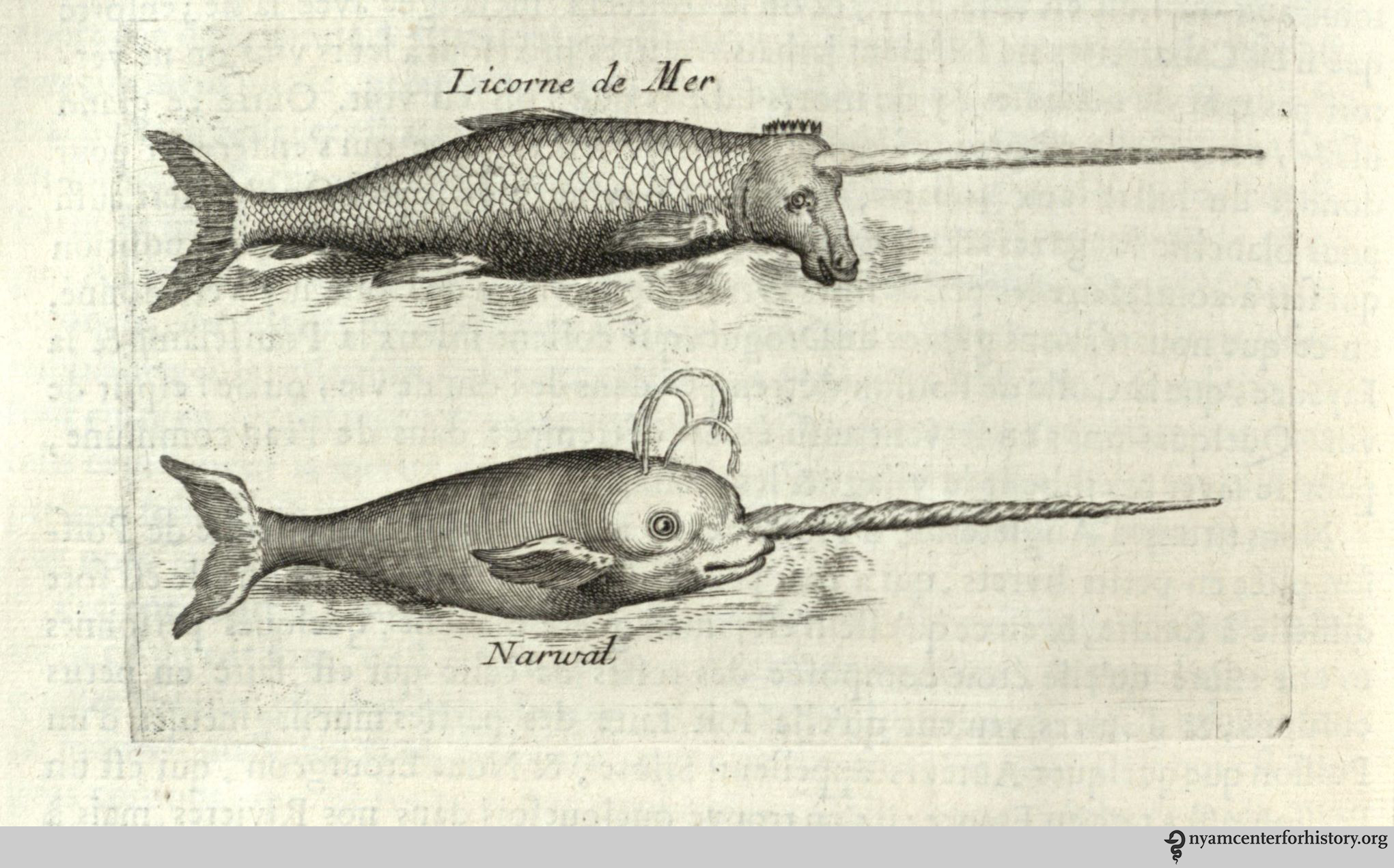
One of the exhibits of the temporary exhibition "Gold and gems" at the History of Pharmacy Collection in Cluj is a wooden apothecary jar from the beginning of the 19th c, with the signature PULV: EPILEPT: NIG: (i.e. in Latin Pulvis epilepticus niger). The product contained various plants (mainly peony), linden charcoal (thus the name and the black color), but also red coral, white amber, narwhal tusk (“sea unicorn”) and sometimes mother of pearl, pearls, and gold.
The product and features for example in the correspondence of the Mozarts. Though the name of the apothecary powder indicates that it was used against epilepsy, similar "black powders" were also used in the 18th and 19th centuries in Europe against fever, shivers, convulsions, colic pains, and nightmares.

 Image result for narwhal apothecary


09/09/2016

Hordearii

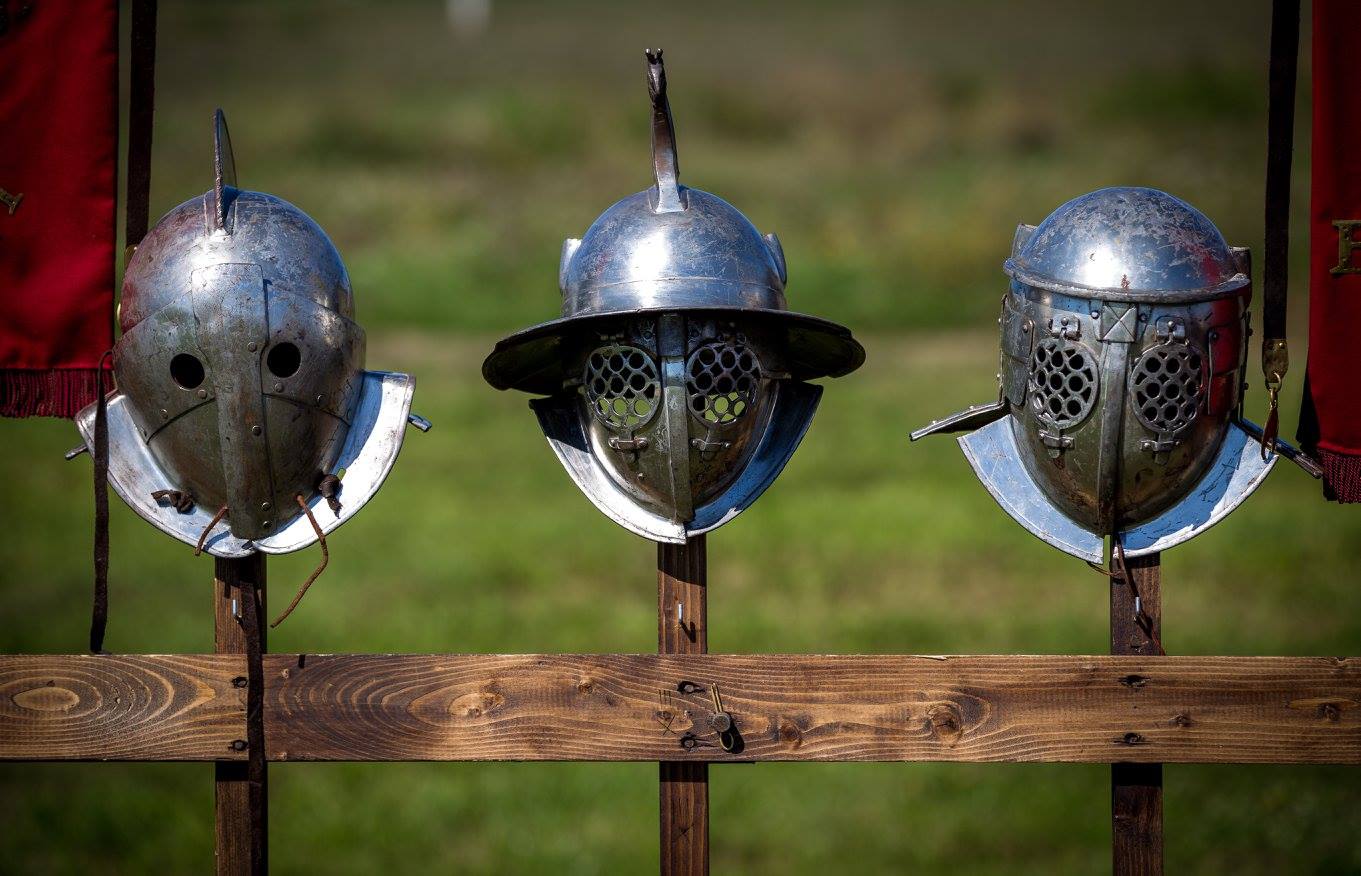
Ancient gladiators were called hordearii, literally barley-eaters, as their diet was meant to keep them protected by a layer of fat tissue. Dried fruit was another important element in their menu.
For the Pugnate! event this weekend at Camp Virtus, near Cluj, we shall cook one recipe that might have been served to (better off) gladiators. The "Glanum Soup", an ancient Roman dish, consists of wheat and meat boiled with vegetables and onions  studded with dry cloves. Fell free to sample the result on September 10th after mid day, in the company of gladiators!


08/09/2016

Homeopathy, Transylvania and precious metals

Samuel Hahnemann, founder of homeopathy, was active in Sibiu / Hermannstadt between 1777 and 1779, as physician, librarian and secretary of Baron Samuel von Brukenthal, Governor of Transylvania. A rich collection of homeopathic small chests, bottles and prescriptions is understandably presented at the History of Pharmacy Museum of that Saxon town in Transylvania. The Gold and gems exhibition at the second such collection in Transylvania, the one in Cluj-Napoca, includes two apothecary bottles for dilutions of gold and silver, used to cure various disorders, especially mental ones. The exhibits are part of a nineteenth-century homeopathic set. Aurum met(allicum) was used in the treatment of many conditions, mostly mental disorders such as depression. Argentum nitr(icum) was used as disinfectant, against nervousness and women’s problems.


07/09/2016

Pugnate! a day in the company of gladiators

Saturday, September 10th, is another great day for outdoors historical reenactment at Camp Virtus! The new event, held near Cluj, in Salicea, from  noon till 6 PM, is a day to try out the life of ancient Roman gladiators - with training, fighting, religious rituals, and food cooked according to ancient recipes.

Young visitors will be able to become gladiators by taking part in several activities testing their strength, equilibrium and perseverance. They will have to pull the rope, carry the flag of the school of gladiators, train at the palus and with the gladiators. In the end they will choose a Roman name from a list of famous gladiators' names, will receive a leather bracelet inscribed with it and them they will no longer be tiro (recruits).
Actually, recruiting is another goal for the event. Girls and boys over 18 who want to join our NGO and become legends in the arena are welcome. Becoming a volunteer is free of charge and you get to travel, learn new things and have fun, historically!


06/09/2016

Buffalo skulls

By most recent Etsy treasury focuses on various types of artistic depictions of buffalo skulls - carved leather, prints, art works, photography and sculpture. It is a collection about autumn, decline and memento mori. Still beautiful, though!
Buffalo and ox skull have been used for their eerie beauty and symbolism since Antiquity. Back then, when they were called bucrania (sg. bucranium), garlanding sacrificial oxen was a common practice and their heads  were displayed on the walls of the temples.
See our bucranium tooled leather wallet HERE


04/09/2016

Ancient Roman ointment remake

My latest reenactment project is in the field of ancient cosmetics and pharmacy. I have remade a probable cream (ointment) with olive oil, coriander seeds and sage, plants that were used by the Romans (as attested in Dioscorides, De Materia Medica) for their anti-inflammatory and anti-fungal properties. After boiling the plants in bain marie for over an hour, I filtered the oiled and them heated it again with natural beeswax. As the quantity was small, the quantity of was added was rather approximate - herbalists online recommend 1 g of was for  7 ml of oil. The cream was thus rather soft, so in the future more besswax is needed. In color it was also rather green, so I might try adding wheat starch as well to see how that goes. Here are some images of the first attempt:


The ointment was available for trying during the latest event at Camp Virtus - Roman elegance, held yesterday near Cluj, in Salicea. I promise improved recipes next time. Sign up here for the newsletter!

01/09/2016

Precious apothecary ingredients

The new temporary exhibition at the History of Pharmacy Collection in Cluj, entitled "Gold and gems", is actually about many other interesting fact about the history of pharmacy, alchemy and snobbery. It tells the story of gold, silver, and gem powder as universal medicines, of the advantages of gilding or silvering pills, of black epileptic powders that contained precious red coral, mother of pearl and crushed narwal tusk, of alcoholic tonics that contained saffron and flecks of gold, but also of ingredients making reference to precious metals, such as Orpiment (arsenic yellow powder) and the Golden citrus (bitter orange).
Don't miss the exhibition that will be open until the end of this year.

Cordial waters contained saffron and flecks of gold

Crocus sativus or Saffron Crocus, the most expensive of spices, reaching the price of gold

The Gold Pigment - Orpiment

Gold leaf and Avicenna's pills

Gold and silver uses in homeopathy - a theory born in Transylvania


31/08/2016

Precious red coral

Corallium rubrum, or precious red coral, was used both as old apothecary ingredient but also in jewelry. Pharmacists used it as calcium supplement and cure against rachitism, but also as ingredient in several composite medicines, such as the anti-epileptic powders. Due to its preciousness, it is among the few organic materials included in the category of gems. Red coral thus features in the new temporary exhibition entitled "Gold and gems" that opens tomorrow, September 1st, at the History of Pharmacy Collection in Cluj-Napoca.
19th c wooden apothecary jar for red coral
19th century ceramic jar for red coral

natural red coral

30/08/2016

Roman elegance raffle

Part of their "Roman elegance" reenactment event at Camp Virtus, members of the Virtus Antiqua NGO are organizing a raffle with thematic prizes: puzzle with gladiator helmet, crepundia-type amulet/charm necklace and handmade snake-shaped leather earrings. These items, inspired by ancient Roman history and artifacts, are offered by the event's partner, Atelierul de istorie.
Don't miss the event on Saturday, September 3rd, at Camp Virtus in Salicea, near Cluj.