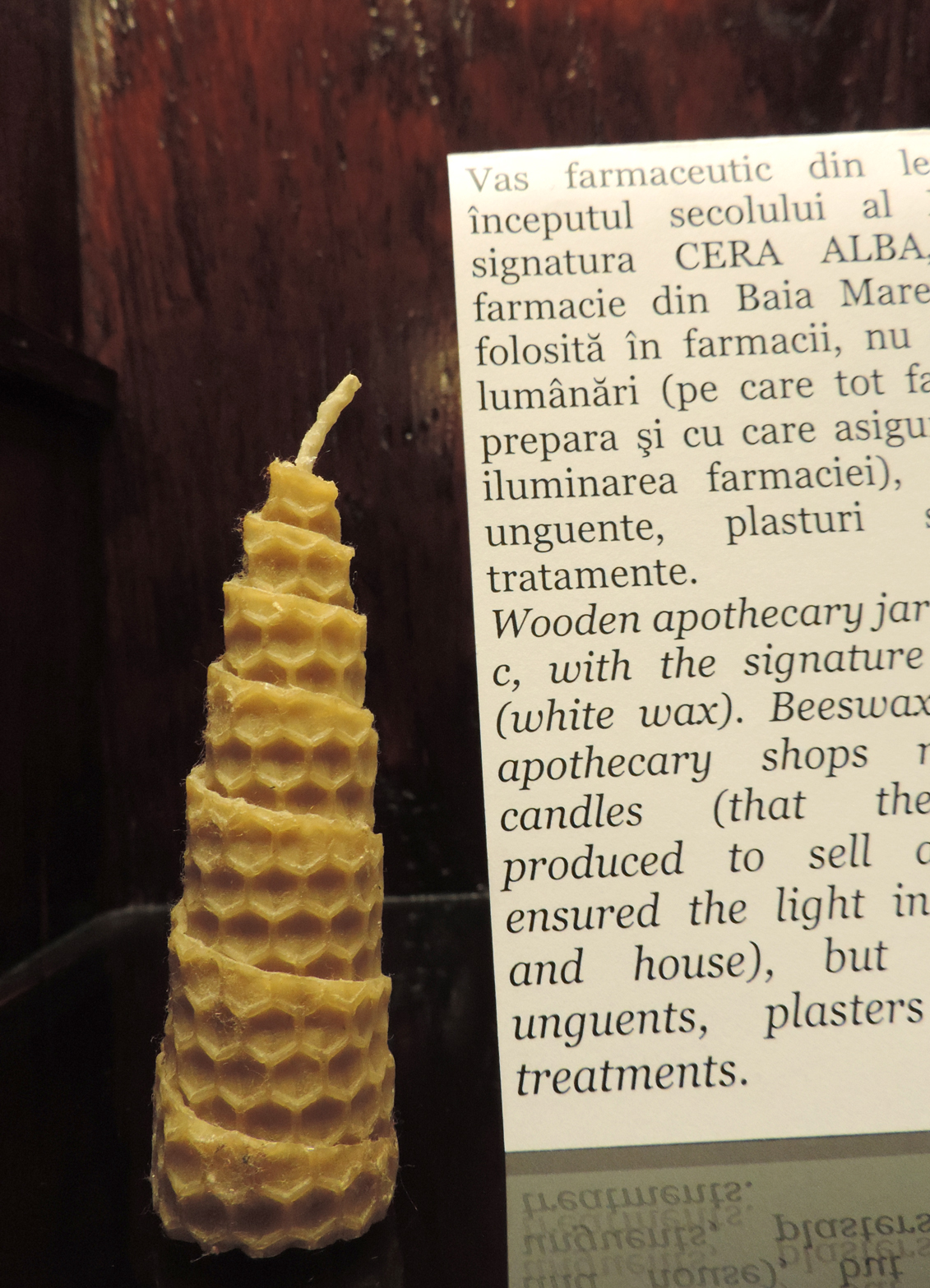
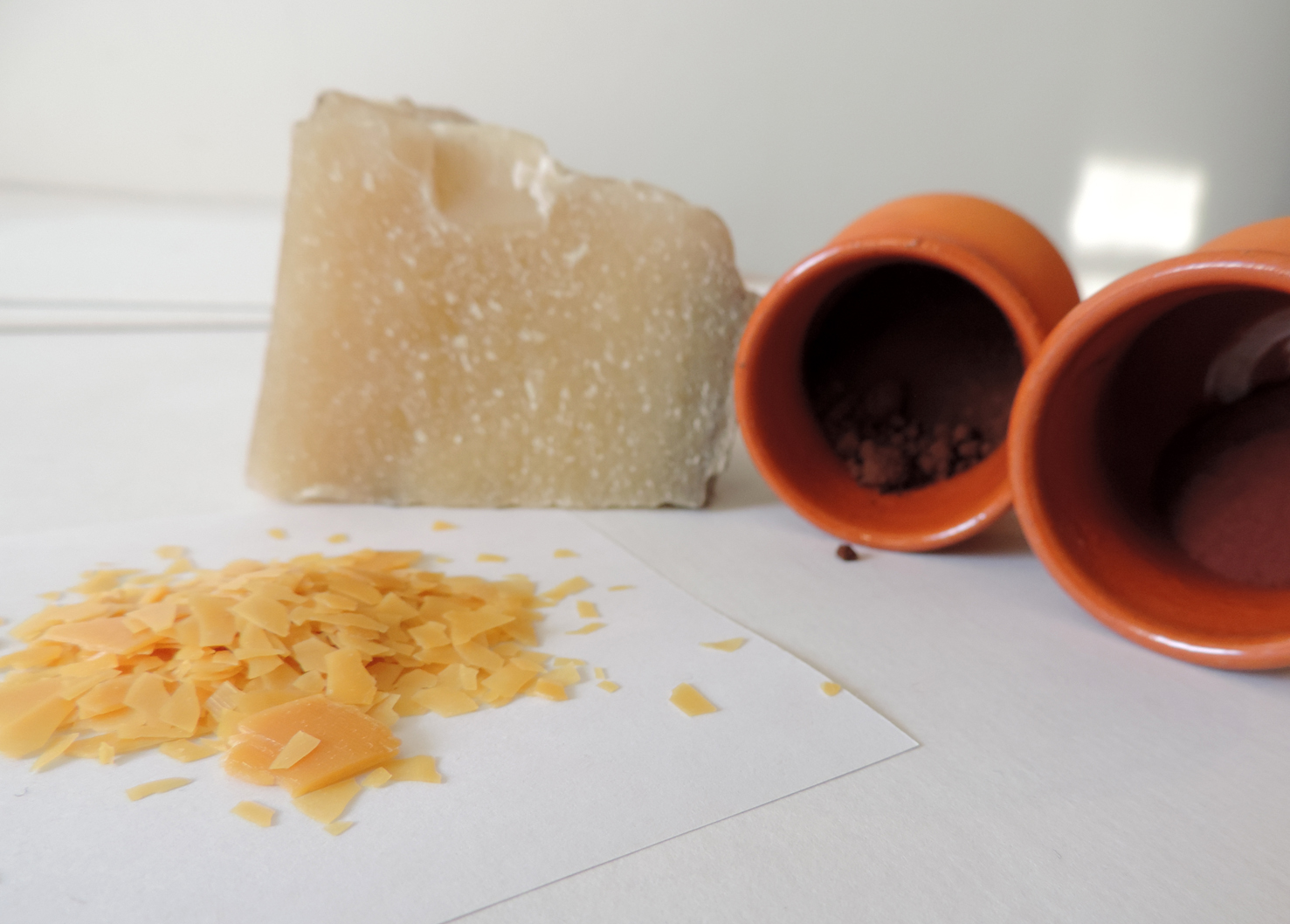
After finally getting everything needed, I woke up early Sunday morning for the experiment. I prepared all the materials, beeswax, carnauba wax, metal containers, pigments, heater, hair dryer, gold foil and the rest. Everything went well, with a bit of struggle in cutting the beeswax lump and determining 10% of carnauba wax.
Then things went south and I was unable to take photos in the heat (literally) of the action. The metal plate supporting the containers started to smoke and had to be removed, but placing the containers directly on the electric heater worked well. Molten was does tent to drip from the brush, so some ended directly on the electric heater, which again did not smell so great - from this point onward I worked with the window open - mind you, it is freezing cold in Romania this time of the year.
I somehow applied the wax to the wooden panels, but trying to fuse it with the hair dryer proved futile - I needed a heating gun. Off to the store, returned with a cheap heating gun, which indeed fuses everything waxy. Which then melts and drips off the wooden panel. Anyway, this is one of the end results, ignore the composition, I was trying everything all together - collage (linocut), color, sewing thread, gold foil.
I presume the beaswax had impurities, thus the white residue on the surface. Or the 10% mix with the carnauba wax was far from accurate. Still, encaustic seems messy and appropriate for large, well ventilated working areas. Also, I envisaged a more translucent quality of the finished work, less irregularities in volume, and easier work with pigment. Gold foil was also very unstable, i.e. it disintegrated when pressed onto the still warm wax and would not stick. I refused the entire layer, so the flaked just drifted around.
So, the next attempt, probably during spring time, on the balcony, will include using pure wax and no pigment, paper, hot stylus for finishes and more tips and tricks to be learned from Nancy Crawford.